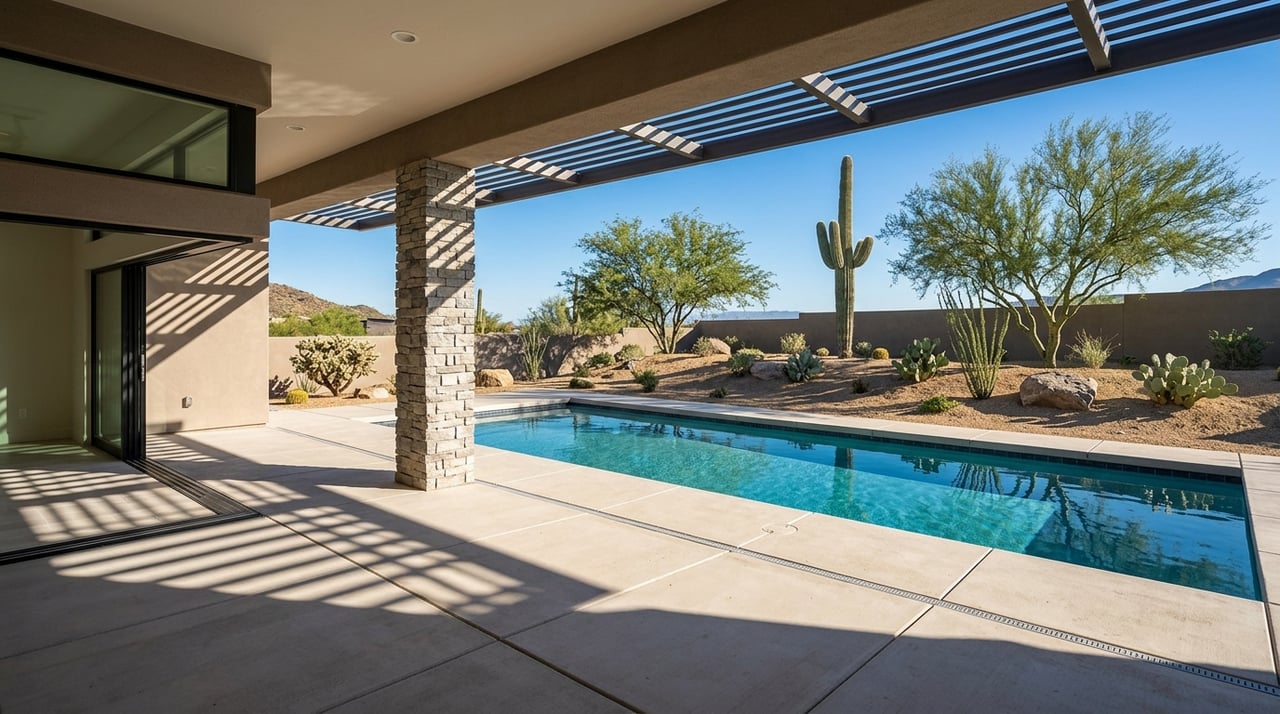
How Catalina Foothills Mountain Views Shape Daily Life
June 11, 2026
June 11, 2026
If you have ever stood on a Catalina Foothills patio at sunrise or watched Tucson light up below you after sunset, you already know that a view here is not just a nice extra. It shapes how your home feels, how you use your outdoor spaces, and even how private and comfortable daily life can be. If you are buying or selling in the Catalina Foothills, understanding what a view really means can help you make smarter decisions. Let’s dive in.
Catalina Foothills sits in a setting where mountains, desert slopes, and city views all come together. Pima County identifies it as a distinct planning area in eastern Pima County, bordered generally by River Road, Sabino Creek, Coronado National Forest, and the Oracle Road and Northern Avenue area. That location, paired with Tucson’s valley setting and the Santa Catalina Mountains rising to roughly 9,300 feet to the north-northeast, is why views play such a big role in the local housing experience.
In practical terms, two homes in the same broad area can live very differently. One may center your day around mountain backdrops. Another may open toward city lights at dusk. A third may offer more open desert and a sense of space that feels quiet and removed.
When people talk about views in the Catalina Foothills, they are usually describing one of a few main outlooks.
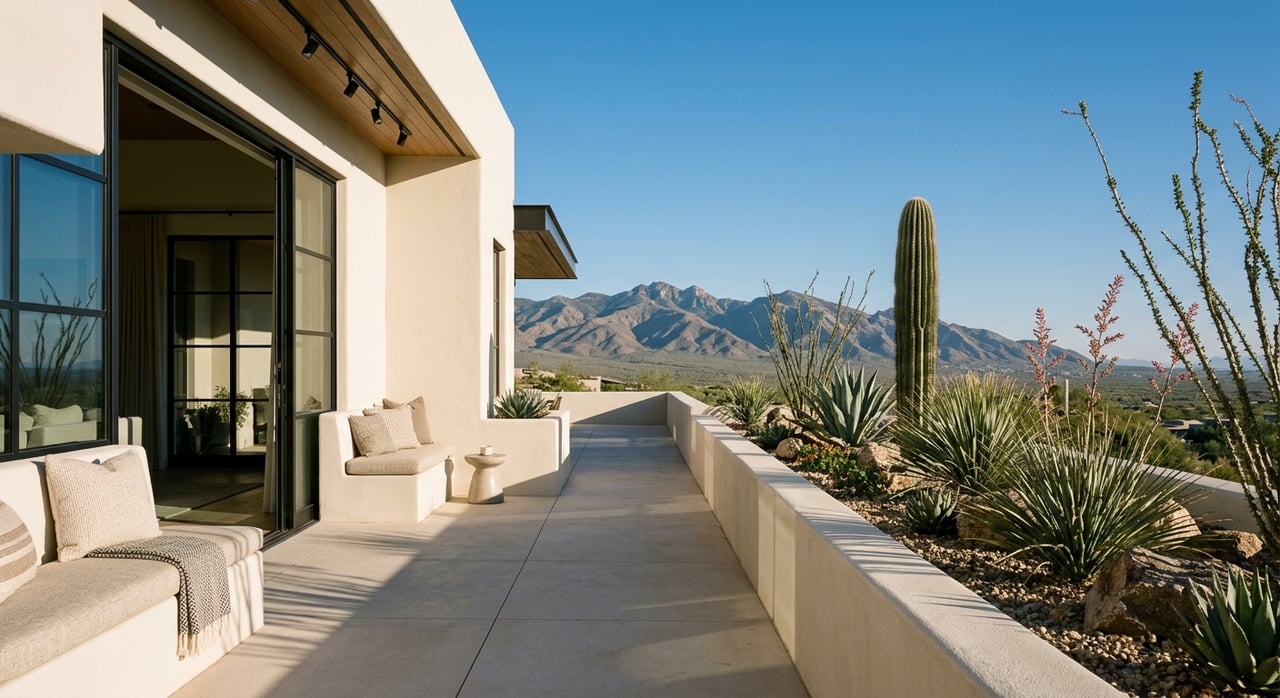
Mountain views usually refer to the Santa Catalina range. In many cases, this is the classic foothills look that buyers picture first. The strength of that view can vary, though, from a broad, front-and-center mountain backdrop to a smaller glimpse over rooftops.
City views usually look down-valley toward Tucson. These tend to become most dramatic in the evening, when sunset color gives way to twinkling lights. For many buyers, this type of view adds a very different mood from a daytime mountain setting.
Some homes are prized less for a single dramatic focal point and more for the feeling of openness. Views of washes, saguaros, and undeveloped slopes can create a strong sense of privacy and room to breathe. In the Catalina Foothills, that can be just as important as a panoramic skyline.
Pima County defines dark skies as preserving the natural light and dark cycle by minimizing light pollution. That matters here because many buyers value evenings that feel calmer and less glare-filled than a typical suburban environment. In some settings, the balance between city-light views and dark-sky character becomes part of the home’s appeal.
A beautiful view may catch your eye first, but what really matters is how it fits into everyday life. In the Catalina Foothills, climate and orientation can change how enjoyable that view feels from morning to night.
NOAA’s Tucson climate normals show an annual average high of 84.0°F, an annual average low of 57.3°F, and 68 days each year at 100°F or above. Tucson also receives around 86% of possible sunshine, with nearly 46% of annual rainfall arriving during the summer monsoon season. In a sunny desert setting like this, the way your home faces matters almost as much as what it faces.
East-facing spaces often capture softer morning light, which can make patios and breakfast areas more comfortable early in the day. South- and west-facing spaces are typically brighter and hotter later on. That means a patio with a stunning sunset view may still need thoughtful shade if you want to use it often.
This is one reason buyers in the foothills often look beyond listing photos. A home can photograph beautifully at golden hour and still feel harsh in the afternoon if the outdoor living areas are exposed. The best view homes tend to pair scenery with livability.
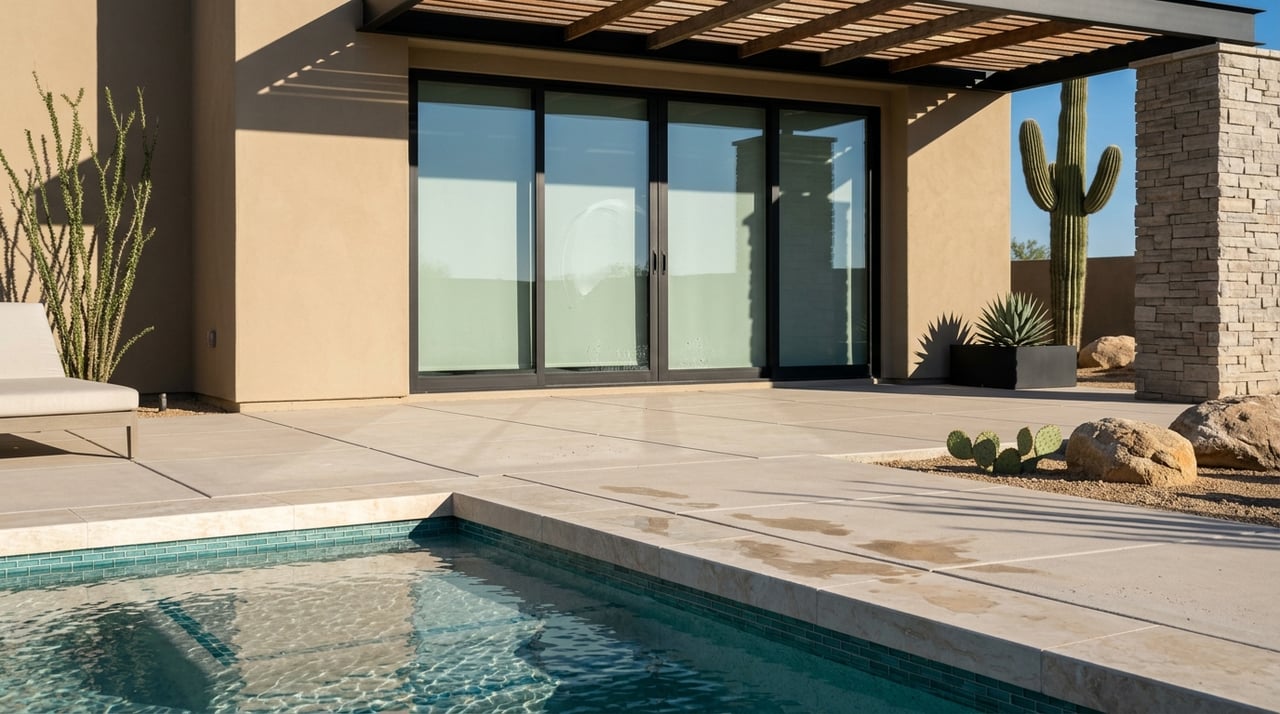
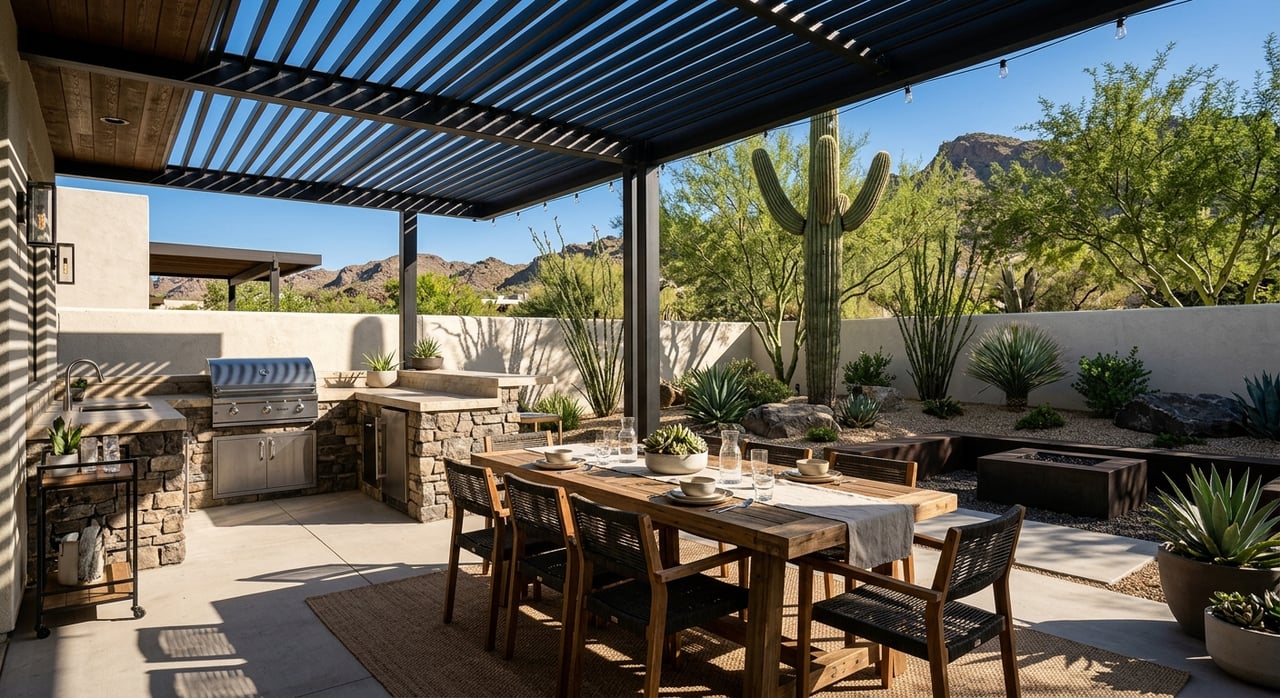
Pima County notes that shade plays an important role in walkability in a desert environment. That same idea applies at home. If your main patio, pool deck, or outdoor dining area lacks shade, the view may be harder to enjoy during warmer parts of the year.
When you tour a home, it helps to notice features like overhangs, pergolas, and other shade structures. These details can make the difference between a patio that looks impressive and one you actually use for coffee, dinner, or time with guests.
In the Catalina Foothills, views are not static. NOAA notes that Tucson’s summer monsoon season generally runs from July 1 through September 15 and accounts for about 46% of annual rainfall. That seasonal shift can change the sky, light, atmosphere, and even the mood of the landscape.
For many homeowners, that is part of the appeal. A mountain view in dry spring light feels different from the same mountain backdrop under monsoon clouds. A city view can feel crisp in winter and dramatic in late summer evenings.
In the Catalina Foothills, privacy is not just about lot size. It is often about elevation, neighboring rooflines, setbacks, and how the home sits on its site.
Pima County’s special-area policy for Catalina Foothills limits construction above 24 feet unless the Board of Supervisors authorizes it, and the county may also limit construction to one story. That low-rise framework helps explain why some foothills homes feel especially open and private. In many cases, a carefully positioned home on a smaller lot can feel more secluded than a larger property with less favorable sightlines.
If privacy matters to you, pay attention to what you can see from the patio, great room, and primary suite, but also what others can see into those same spaces. In this market, a view and a sense of seclusion often work hand in hand.
Not all views carry the same long-term impact. Research summarized by the Appraisal Institute notes that scenic views can contribute to property value, but the premium depends on quality, scarcity, and usefulness. One cited study found that a “good view” added about an 8% premium, while broader literature shows that view premiums vary by market and by the type and quality of the outlook.
That matters in the Catalina Foothills because this is already a high-value ownership market. According to the U.S. Census Bureau’s 2019–2023 QuickFacts, the owner-occupied housing rate is 75.6%, the median owner-occupied home value is $604,100, and median household income is $113,201. In a market with this price level, differences in view quality, privacy, and the chance of future obstruction can matter in a meaningful way.
A stronger foothills view is usually one that feels anchored by topography rather than dependent on a narrow angle from one window. It is often helped by open space, washes, setbacks, and neighboring lot conditions. County height limits can also support the low-rise character that helps protect many sightlines.
In simple terms, a broad and usable view is usually more durable than a partial peek between rooflines. Buyers and sellers alike benefit from understanding that difference. A view that shapes daily living tends to be more meaningful than one that only sounds good in marketing remarks.
If you are touring homes in the Catalina Foothills, it helps to go beyond the simple question of whether a property has a view. A better question is what kind of view it offers, how often you will enjoy it, and how likely it is to stay that way.
Here are a few smart things to evaluate:
This kind of close look is especially helpful for relocation buyers and second-home shoppers who may first encounter a property online. In the foothills, the most satisfying homes usually balance scenery, comfort, privacy, and everyday function.
If you are selling a home in the Catalina Foothills, your view is part of the property’s story, but clarity matters. Buyers in this market often respond best when the view is presented accurately and tied to daily use.
That means showing more than one dramatic photo. It helps to highlight where the view is visible, when it is best experienced, and how outdoor living spaces support it. A mountain backdrop from the great room, a city-light view from the patio, or open desert visible from the primary suite can each speak to a different buyer goal.
Strong presentation also means being realistic. A broad, protected outlook will usually feel more compelling than a partial glimpse. When the marketing matches the real experience of the home, buyers can understand the value more clearly and make more confident decisions.
If you want expert guidance on how views, privacy, and site position affect a home’s appeal in the Catalina Foothills, Evan Johnson offers hyperlocal insight and concierge-level support tailored to this market.
Stay up to date on the latest real estate trends.
Get assistance in determining current property value, crafting a competitive offer, writing and negotiating a contract, and much more. Contact me today so I can guide you through the buying and selling process.